Menu

Le Roi du Vin
Estate, cellar and terroir.
Wine estates, domaines and wine regions of Europe
Discover the collection- 15Places in the collection
Spitz an der Donau, Wachau — Isiwal · Wikimedia Commons · CC BY-SA 4.0
The collection
Le Roi du Vin
Wine estates and regions as places: where it is made, not what it costs.

Alto Douro
Norte
The Alto Douro Wine Region in northern Portugal is a cultural landscape shaped by long-established wine production. UNESCO inscribed it in 2001, recognising the relationship between steep terrain, terraced vineyards, settlements and the organisation of agricultural work. Port wine became internationally prominent from the eighteenth century, but the region’s viticultural history is much longer. Dry-stone walls, changing terrace systems, quintas and villages record successive methods of cultivating the slopes. The river and its tributaries organise the geography of the landscape. The World Heritage property represents a defined area within the wider Douro wine region, not every vineyard along the entire river. It remains a working agricultural landscape rather than a single monument or winery.
Editorial selectionCC BY-SA 3.0

Château d'Épiré
Épiré, Savennières · Pays de la Loire
Château d’Épiré is a wine estate in the village of Épiré, within Savennières in Maine-et-Loire. Chenin Blanc is central to its white wines, grown on a varied geological setting that includes schist and sandstone. The estate’s cellars occupy the village’s former Romanesque church, acquired by the family in 1882 and converted into a chai in 1906. The present château belongs to nineteenth-century rebuilding; the regional heritage inventory describes renovation from 1838 and substantial works in the 1850s. This is distinct from the much older history of wine growing in the area. The estate offers wine tourism and tasting arrangements through its own website. Its architectural interest includes the reuse of a religious building for production, as well as the house and wider Loire setting.
Editorial selectionCC BY-SA 2.0

Château de Brezé
Brézé, Bellevigne-les-Châteaux · Pays de la Loire
Château de Brézé stands near Saumur in Maine-et-Loire. The above-ground château combines building campaigns from different periods with a striking system of deep moats and underground spaces cut into the tuffeau. It is protected as a French historic monument. Wine growing forms another part of the property’s history and present identity, documented by the regional tourist organisation’s separate vineyard listing. The château tour and the wine estate’s reception are different visitor offers and should not be assumed to share a single ticket or itinerary. Brézé belongs to the Saumur wine landscape, where limestone is both building material and the substance into which storage and working spaces have been excavated.
Editorial selectionCC BY-SA 3.0

Château de Chaintres
Dampierre-sur-Loire, Saumur · Pays de la Loire
Château de Chaintres is a wine estate at Dampierre-sur-Loire, near Saumur. Its seventeenth-century residence stands within the Saumur-Champigny landscape. The estate extends over roughly twenty hectares and includes the large walled Clos des Oratoriens, associated with the Oratorians of Notre-Dame des Ardilliers and the year 1675. The de Tigny family has been connected with the property since 1938. The estate’s own account records organic certification from the 2013 vintage, while the Saumur wine organisation lists its current wine and visitor offers. These include Saumur-Champigny alongside other wines of the area. Wine tourism provides a route to understanding the clos, cultivation and production; it is distinct from unrestricted access to a private historic house.
Editorial selectionCC BY 2.0

Château de Fesles
Thouarcé, Bellevigne-en-Layon · Pays de la Loire
Château de Fesles is at Thouarcé, south of Angers, in the Anjou wine landscape. Its present house and park were established in the eighteenth century. The estate relates a much older history of wine growing, referring to medieval documentation of Bonnezeaux; that history should not be used to date the surviving house to the eleventh century. The Boivin family developed the vineyard during the nineteenth century, and a substantial restoration was undertaken in 1991 under Gaston Lenôtre. The estate’s account records the Helfrich family’s ownership from 2008. Bonnezeaux, a sweet white wine associated with this landscape, is central to Fesles’s identity. The estate advertises visits to the vineyards and barrel cellar by reservation.
Editorial selectionPublic domain

Château de Moncontour
Vouvray · Centre-Val de Loire
Château de Moncontour is at Vouvray in Indre-et-Loire, on the Loire side of the Touraine wine landscape. This is the wine estate, not the similarly named castle ruins in Vienne or Brittany. The Feray family acquired the property in 1994. The Musée de la Vigne et du Vin occupies troglodyte cellars and presents tools and stages of vineyard work, vinification and bottling. The visitor experience can include tasting the estate’s wines. The tourist office distinguishes self-guided museum visits from guided arrangements for groups. Moncontour forms part of a wider group of wine estates, so figures describing that group’s total vineyard area should not automatically be assigned to the château parcel alone.
Editorial selectionCC BY-SA 4.0

Château de Valmer
Chançay · Centre-Val de Loire
Château de Valmer lies at Chançay in Indre-et-Loire, within the Vouvray area east of Tours. Its gardens follow two principal axes across a spur between valleys. Terraces, architecture and clipped planting reflect the sixteenth- and seventeenth-century composition of the site. Wine production is a continuing activity: the estate describes a vineyard of thirty-five hectares and offers still and sparkling wines, including dry, semi-dry and sweet Vouvray. The gardens and wine estate are related parts of the property, but visiting and tasting arrangements depend on the current programme. Valmer’s value within the wine world lies in the direct relationship between a cultivated vineyard landscape and a deliberately composed garden setting.
Editorial selectionCC BY-SA 3.0

Château Gaudrelle
Rochecorbon · Centre-Val de Loire
Château Gaudrelle is a Vouvray wine producer whose visitor contact is in Rochecorbon, beside the Loire near Tours. The estate’s technical and wine information identifies Chenin Blanc and soils that include clay-limestone and clay-siliceous ground. Its range includes different expressions of Vouvray, and its account of older vintages emphasises the capacity of Chenin to develop with age. The historic château bearing the Gaudrelle name is at Vouvray; it should not be confused with the producer’s current visitor reception in Rochecorbon. The image of that historic building is therefore labelled with its location. A wine visit should be arranged with the producer using the current official contact details.
Editorial selectionCC BY-SA 3.0
Domaine du Closel
Savennières · Pays de la Loire
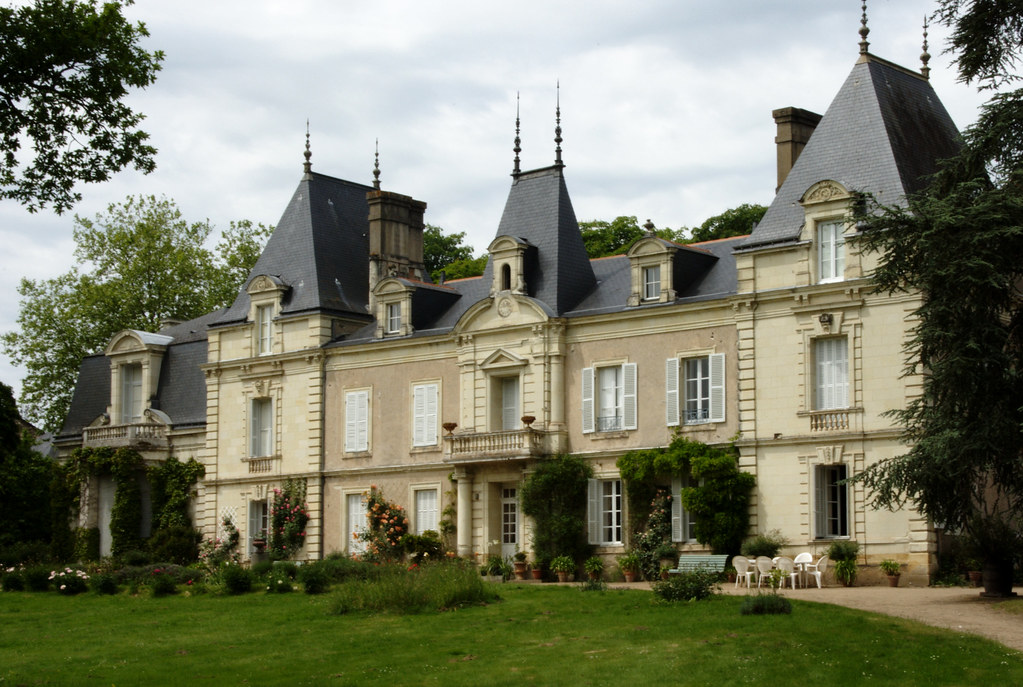
Domaine du Closel is based at Château des Vaults in Savennières, Maine-et-Loire. The estate combines a classical house and landscaped agricultural park with vineyards on the Loire’s right-bank slopes. Chenin Blanc and the area’s varied schist, volcanic and metamorphic geology are central to its account of Savennières. The official website presents wines including Jalousie, Les Caillardières and Clos du Papillon, and offers tastings and guided experiences by reservation. Ownership information needs a dated qualification: the transaction adviser records that a judgment of 5 May 2026 approved the estate’s transfer to Domaine Belargus. Earlier accounts of the former family management therefore describe history, not necessarily the current operator. The estate’s present official contact remains the appropriate source for visiting arrangements.
Editorial selectionCC BY-SA 2.0

Getariako Txakolina
Getariako Txakolina was recognised as a denomination of origin in 1989. In 2007 its territory expanded to the whole historical territory of Gipuzkoa. Its regulatory council is based in Getaria, and the source describes vineyard renewal preceding the denomination’s recognition.
Editorial selectionCC BY-SA 3.0

Juridiction de Saint-Émilion
Nouvelle-Aquitaine
The Jurisdiction of Saint-Émilion lies in Gironde, between the Dordogne and the Barbanne. Its UNESCO inscription of 1999 concerns a historic vineyard landscape comprising eight communes, rather than the town alone or an individual château. Vine growing developed through a long history that includes Roman origins and medieval expansion. Religious foundations, pilgrimage and the jurisdiction’s political status also shaped the territory. In Saint-Émilion, the monolithic church, collegiate church and cloister stand alongside secular remains such as the Château du Roi. Beyond the town, estates, wine storehouses and modest workers’ houses record the organisation of wine production. The continued cultivation of vines is fundamental to the property’s significance.
Editorial selectionCC BY-SA 3.0

Lavaux
Lavaux is a terraced vineyard landscape above Lake Geneva between Lausanne and Vevey. The heritage association describes its cultivation as extending over more than a thousand years. About 180 winegrowing families cultivate Chasselas and maintain its terrace walls.
Editorial selectionCC BY-SA 4.0

Vipava Valley
The Vipava Valley is a winegrowing landscape in western Slovenia. Its official tourism portal describes small vineyards distributed among varied hillsides and terraces, with family farms and historic stone cellars. Mediterranean influences and the northeast Burja wind are part of the region’s winegrowing setting. Alongside internationally familiar grapes, local producers cultivate varieties including Zelen and Pinela. Matija Vertovec’s 1844 work on viticulture and the winegrowing school established at Slap in 1873 form part of the valley’s documented wine history.
Editorial selectionCC BY-SA 3.0

Wachau
Vinea Wachau describes three origin categories for Wachau DAC: regional, local and single-vineyard wines. Its description limits the single-vineyard category to Grüner Veltliner or Riesling grapes from one vineyard and requires hand-harvested grapes in each DAC category.
Editorial selectionCC BY-SA 4.0

Weinviertel
The Weinviertel is a winegrowing landscape of gentle hills and extensive vineyards. Its tourism organisation identifies cellar lanes, wine festivals and Heurigen culture among the region’s characteristic features. The region takes its name from wine.
Editorial selectionCC BY-SA 3.0